Humanity’s fascination with space has always been among the most magnificent obsessions. From the first steps on the Moon to sending rovers onto Mars, it is NASA that has played the leading role in expanding our knowledge of the cosmos. Looking ahead to the next century, the journey into space promises to be more dynamic and transformative than ever before. Below are some of the upcoming missions of NASA, and how they are going to shape the future of human space travel, scientific discovery, and our place in the universe.
The Artemis Program: Returning to the Moon
The most ambitious and high-profile mission by NASA in recent years has been the Artemis program. In its mission to land the first woman and the next man on the lunar surface by the mid-2020s and to establish a sustainable presence on the Moon by the end of the decade, it has named this mission Artemis, after the Greek goddess of the Moon. This will be our first return to the Moon since the Apollo missions of the 1960s.
The Artemis Program is not only about sending astronauts to the Moon but also creating infrastructure for a long-term presence. Infrastructure construction will include the Lunar Gateway, a space station designed to orbit the Moon as a part of preparations for missions to the lunar environment. The station would also contribute to the development of the needed technologies for deep space, which includes advanced life support systems and resource utilization, which could enable astronauts to use the resources in space to create fuel and oxygen.
Beyond the Moon, Artemis will be a stepping stone toward NASA’s long-term goal: Mars. Just about everything learned in creating sustainable habitats, learning how to conduct scientific research, and living in space will be applied to get ready for those long-duration missions to the Red Planet.
Mars Missions
While the Moon will be an essential stepping stone, Mars remains one of the most exciting long-term destinations for humanity. NASA has actively worked on robotic and human missions to Mars, and recent developments have brought us closer to landing astronauts on the Red Planet.
The most revolutionary missions currently underway include Perseverance Rover. Launched in July 2020, the Perseverance landed on Mars in February 2021, and it is focused on the search for signs of past life in Jezero Crater. The rover is drilling into Martian rock to collect samples that will eventually be brought back to Earth by a future mission. This is part of the Mars Sample Return program: a joint program by NASA and the ESA intended to be the first mission ever to return dirt from Mars back to Earth to study.
Perseverance had its mission, but it also tested new technologies that could enable human missions someday. Among them, the production of oxygen by means of the MOXIE-an acronym for Mars Oxygen In-Situ Resource Utilization Experiment-developed to turn a thin atmosphere rich in carbon dioxide on Mars into oxygen-is key technology that future astronauts would need to breathe and as rocket fuel for a return trip home.
Success for the Perseverance-which came with the Ingenuity Helicopter, executing the very first controlled flight on another planet-really was a real measure of how fast technology is moving. These missions are providing mission-critical insight into how we might live and work on Mars, paving the way for future crewed missions. NASA currently aims for the 2030s to send the first crew to Mars, with the goal of landing astronauts on the surface and establishing a continuous presence.
James Webb Space Telescope
While space exploration by humans is one of the top priorities of NASA, the agency has also been instrumental in promoting our knowledge of the universe through telescopic observation. One of the most ambitious projects in this realm was the James Webb Space Telescope (JWST).
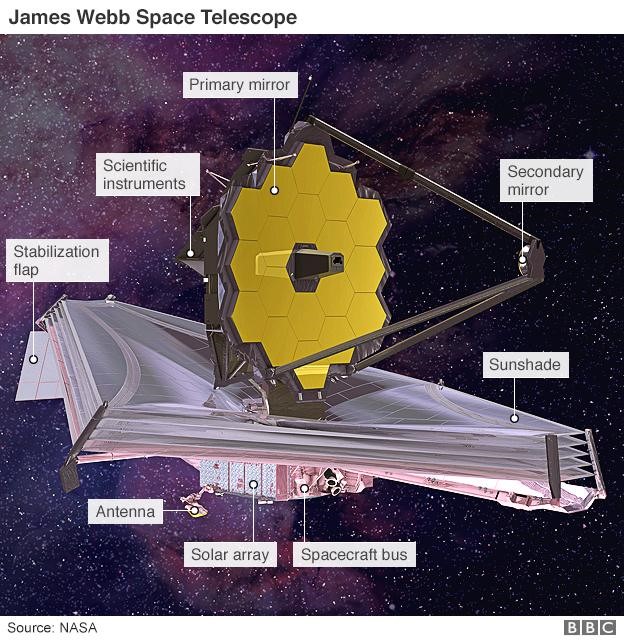
The JWST is the most powerful space telescope ever built, enabling the probing of the universe much deeper than any other telescope has been able to. It shall view the very first galaxies formed after the Big Bang and give insight into the beginnings of the universe. JWST also studies exoplanets in search of conditions suitable to support life, and maybe life itself.
The International Space Station
In addition to exploring other worlds, NASA has been leading the development capability for long-period operations in space sustainably. For over two decades, the International Space Station (ISS) has been orbiting Earth as a microgravity laboratory where scientists on Earth perform experiments that cannot be conducted any other way.
The unique platform of ISS can be used for understanding the impact of long-duration flight on the human body. The astronauts on board conducted research on muscle atrophy, loss of bone density, and also damage caused by radiation on human cells-all very important data for future, longer-duration flights to the Moon, Mars, and other destinations. NASA wants to extend the experience gained from the ISS to create sustainable habitat conditions within the frame of the Artemis program.
Exploring Asteroids: The OSIRIS-REx Mission
Another exciting frontier in space exploration includes the asteroids-leftover remnants of our solar system in formation. Indeed, in 2016, NASA launched the OSIRIS-REx mission to obtain a sample from a certain asteroid called Bennu and successfully return it to Earth in 2023. Bennu is a near-Earth asteroid rich in carbon-based materials that can yield vital clues about the beginning of life on Earth.
\
Not only will OSIRIS-REX return with samples of Bennu’s surface material, but it is also contributing to scientists’ understanding of the potential hazards posed by asteroids to Earth. By studying Bennu’s composition, NASA can refine models to better predict the paths of asteroids that may collide with Earth.
Missions such as OSIRIS-REx may lead the way in the future to asteroid mining, which could provide valuable resources for space exploration. Elements such as platinum, gold, and water could be used to fuel spacecraft, build habitats, or support life in space.
Sustainability in Space
The most challenging part of the further space exploration process for humankind will involve sustainability. Space debris includes used satellites, spent rocket stages, and fragments from collisions that pose a serious risk to both crewed missions and operational satellites.
NASA works in developing technologies with the ability to mitigate space debris. Sample projects include the OSAM-1 mission, the very first ever On-orbit Servicing, Assembly, and Manufacturing, demonstrating features such as in-orbit repairs and refueling. It also will investigate space debris removal, avoidance of further collisions, and safety for future space missions.
NASA has also been involved in the collaboration of other agencies and organizations in developing systems that would be important in space traffic management, useful in tracking and managing objects in orbit to reduce further collisions and creation of debris.
The Future
While it is yet a dream, interstellar travel little by little materializes as humans continue to explore the solar system. Although human exploration beyond the solar system is still a long way ahead, NASA has initiated programs that could lay the groundwork for future missions.
Another such program is the Breakthrough Starshot project that aims to send tiny lightweight probes to the nearest star system – Alpha Centauri – in just a few decades. These probes are supposed to sail through space at a fraction of the speed of light propelled by powerful lasers. It is still in the earliest stages of the mission design study, but it represents that kind of breakthrough which may eventually see humanity take its first steps beyond our solar system.
Conclusion
Space exploration has a bright future ahead, and right at the forefront is NASA’s mission. From returning to the Moon on Artemis, sending humans to Mars, exploring the far reaches of the universe with the James Webb Space Telescope, and making a path for sustainability in space, NASA is laying the foundation for humanity’s future among the stars. The next few decades promise to be an amazing time for the exploration of space, with revelations, new uses of technology, and the relentless drive to extend the limits.
As we rise deeper into the cosmos, humankind is not just discovering new places; it’s a question of securing our status in the heavens. The universe is ours, no longer reaching for the limit of the sky.
 Double Click
Leave a comment